


You are sitting in your car outside the workplace, sitting in the passenger seat of a helicopter flying back and forth to an offshore platform, or staring at a blank document on your computer screen. On paper, you are safe. On paper, you are a capable, experienced adult.
Yet, beneath the surface, your nervous system tells a different story.
Your pulse quickens. Your chest tightens like an iron band. A knot of dread forms in your stomach before you even step up to give a brief presentation, a family conversation, or turn the key in the ignition after a minor accident.
When traumatic events or high-stress experiences remain unprocessed, they drag us down under the weight of painful negative beliefs about ourselves: core ideas like “I am unloveable,” “I am weak,” or “I am unsafe.” These deep-seated beliefs silently dictate how we show up in the world, influencing our choices, our relationships, and our sense of self-worth.
Perhaps you’ve sat on therapy couches for years. You have analyzed your past intellectually. You can explain why you feel this way, where it started, and what triggers it. But despite all that insight, your physical body hasn’t received the message that the danger is over.
For many of our clients across Canada, this visceral disconnect is where progress stalls:
- The Body Remembers: You feel sudden surges of panic, physical nausea, or hypervigilance in situations that shouldn’t feel life-threatening.
- Gaps in the Story: You have noticeable blank spots in your memory, perhaps a blur between ages 6 and 12, or missing pieces from a high-stress deployment or emergency response call.
- Vivid Flashbacks: Past moments break through into the present day with disturbing clarity, pulling you back into the exact sights, sounds, or physical distress of the original event.
- Performance Avoidance: You experience overwhelming, inexplicable dread when asked to speak publicly, complete specific high-stakes tasks, or face everyday social interactions.
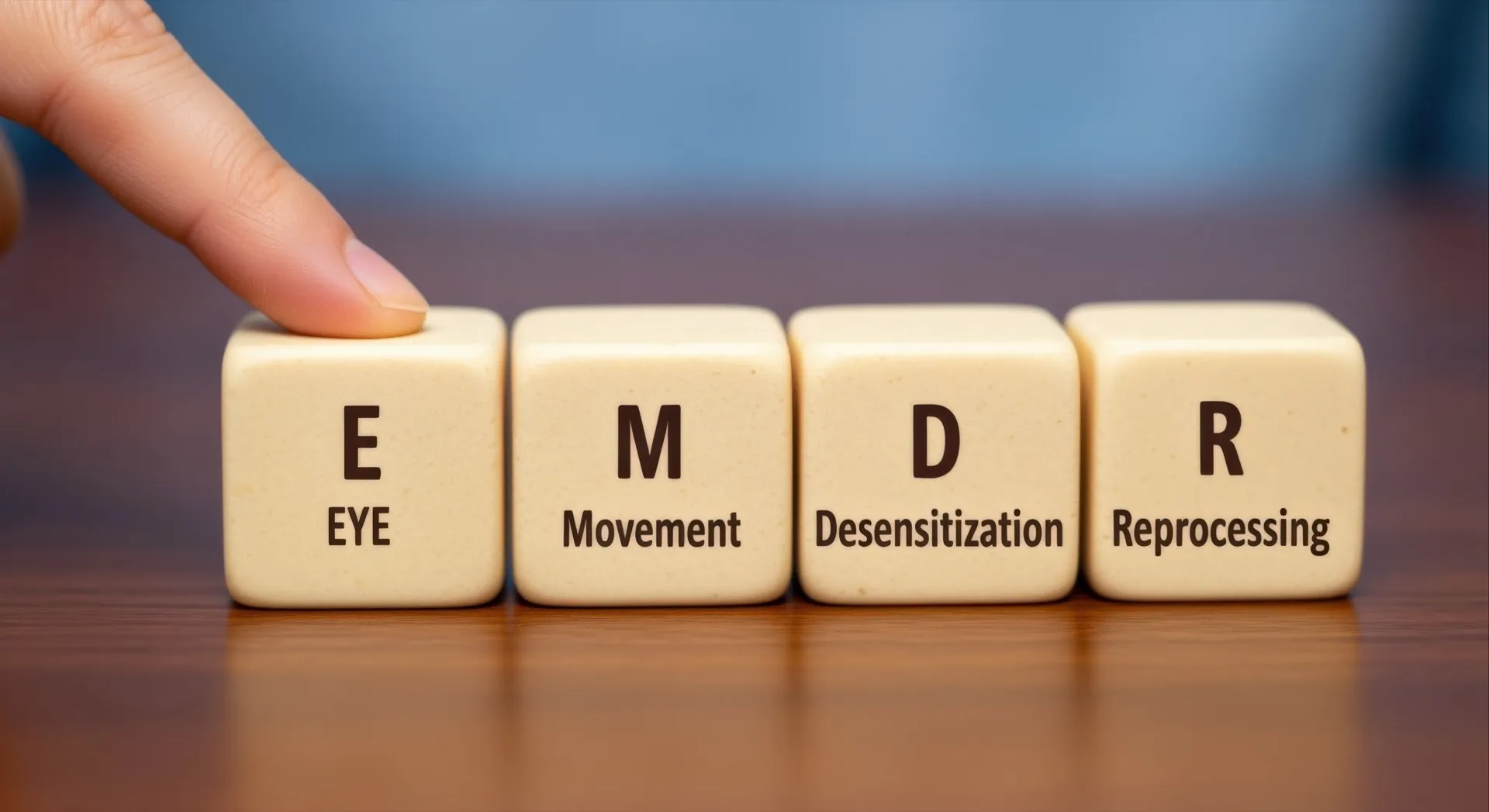
Talk therapy engages the analytical, verbal parts of your brain. But deep traumatic memories and threat responses are stored in the survival-based, non-verbal brain structures and physical nervous system. Eye Movement Desensitization and Reprocessing (EMDR) is a specialized, neurobiologically grounded therapy designed to bridge this exact gap.
What Is EMDR Therapy & How Does It Work?
Developed in 1987 by psychologist Dr. Francine Shapiro, EMDR is an evidence-based psychotherapeutic approach that helps the brain reprocess trapped, poorly integrated memories.
When a traumatic or terrifying experience occurs (a motor vehicle collision on the highway, an assault, a distressing childhood event, or repeated workplace trauma), the brain’s natural information processing system can become overwhelmed. Instead of storing the experience as a clear, finished memory in the past, the brain freezes the event in its raw, unprocessed state. Every time a current situation resembles that past memory, your nervous system reacts as if the event is happening right now.
Comparing Approaches
| Approach | Talk Therapy (Top-Down) | EMDR Therapy (Experiential / Bottom-Up) |
|---|---|---|
| Primary Focus | Focuses on verbal narrative and conscious analysis | Focuses on brain & body memory storage |
| Session Requirements | Requires detailed narration of past events | No need to detail every painful event verbally |
| Between-Session Work | Often involves weekly written or reflective homework | No outside homework required |
| Brain Target | Targets conscious, cognitive thoughts | Reprocesses core somatic & emotional distress |
During EMDR, you briefly tune into the distressing memory while simultaneously engaging in Bilateral Stimulation (BLS), rhythmic, alternating left-right stimulation of the brain. This dual attention keeps one foot anchored safely in the present moment while allowing your brain to finalize processing the past.
Methods of Bilateral Stimulation We Offer
Every individual’s sensory system is unique. We tailor our bilateral stimulation tools to what feels most comfortable and grounding for you:
- Bilateral Eye Movements: Following the clinician’s gentle, smooth visual focal point or light bar back and forth.
- Auditory Tones: Listening to alternating, gentle audio tones through specialized headphones.
- Neurotech Tactile Tappers: Holding small, handheld devices that deliver light, alternating rhythmic vibrations to your hands.
- Self-Tapping (Butterfly Hug or Body Tapping): Utilizing self-directed cross-body tapping techniques on your shoulders or arms.
- Therapist-Assisted Tapping: With explicit discussion, clear boundaries, and full ongoing consent, gentle alternating tapping on the client’s knees or hands by the practitioner.
Curious what a session actually looks like? Watch EMDRIA’s official two-minute explainer for clients:
What to Expect: The Adaptive Information Processing (AIP) Model
At the heart of EMDR therapy is the Adaptive Information Processing (AIP) model. The AIP model posits that your brain has a natural, inherent capacity to heal and move toward psychological health, much like how your physical body works to heal a cut or injury once the obstruction is removed.
When traumatic memories freeze, they lock in damaging, core negative self-beliefs. The AIP model enables a person to reprocess these locked memories and gradually change what they believe about themselves at their core. The kind of shift clients work toward looks like this, though every client’s pace differs and no outcome is guaranteed:
| Where Clients Often Start | The Kind of Belief They Work Toward |
|---|---|
| “I am unloveable” | “I am a loveable person” |
| “I am unsafe / helpless” | “I am safe and capable” |
| “I am broken / a failure” | “I deserve love” |
What You Experience in a Session
It is common for clients to arrive at an EMDR session feeling anxious, sad, or understandably apprehensive about facing deep-seated emotional pain. Many clients notice meaningful change within a clinical hour; for others it takes longer:
- Core Shift in Perspective: Clients enter the room believing “I am unloveable” or “I am powerless,” and leave with a new belief that fits: “I am loveable, I deserve love, and I can give and receive love.”
- Physical Weight Lifting: As stored emotional distress releases, you can watch tension drain from a client’s shoulders, face, and chest.
- Walking Away Refreshed: Clients often enter the hour feeling weighed down and leave feeling lighter, refreshed, sometimes surprised by how quickly it happened.
What If I Don’t Think I Have Trauma? Can EMDR Still Be Right for Me?
Absolutely. You do not have to identify as someone who has experienced major trauma to benefit from EMDR.
EMDR works by bringing dual attention to several components at once:
- Images & Memories: Visual cues or past mental scenes.
- Negative Beliefs: Unhelpful core thoughts about yourself (e.g., “I am not safe,” “I am helpless,” “I am going to fail”).
- Emotional Feelings: The specific distress or fear connected to those thoughts.
- Sensations in the Body: Physical tightness, stomach knots, or racing pulses.
By attending to all of these elements at once while simultaneously receiving bilateral stimulation, your brain processes stored blocks deeply and thoroughly.
Performance Enhancement for Athletes & Business Leaders
Because EMDR restructures how the brain processes performance anxiety and fear of failure, it is widely utilized for performance enhancement across sports, executive leadership, and the arts:
- Elite & Professional Athletes: Sports psychologists integrate EMDR to help athletes overcome “choking” under pressure, recover from the psychological hesitation following sports injuries, and clear mental blocks after a costly mistake. Using EMDR’s “Future Template” protocol, athletes mentally rehearse high-stakes competitions with calm focus, training their nervous systems to perform naturally when under pressure.
- CEOs, Executives & High-Performers: Business leaders and corporate executives use EMDR to clear intense stage fright before major keynote speeches, break through decision-making paralysis, and build resilience in high-stress, high-pressure professional environments.
This is a growing, research-backed field: EMDRIA maintains a dedicated performance-enhancement knowledge base, and a 2024 Anglia Ruskin University study evaluated EMDR combined with imagery training in elite academy footballers and first-team goalkeepers, measuring improvements in self-efficacy, confidence, and competitive anxiety. EMDR has also entered mainstream public awareness through public figures; Prince Harry documented his own EMDR session in the Apple TV+ series The Me You Can’t See, using it to reprocess the trauma of losing his mother.
Whether you want to break free from fear before giving a public presentation or excel in your field, EMDR can help align your mind and body for peak performance.
Why EMDRIA Certification Matters (Questions You Should Ask)
Not all EMDR training is the same. Today, anyone can take a brief weekend workshop online and claim to offer “EMDR therapy.”
Because trauma processing directly impacts the nervous system, working with an improperly trained clinician can lead to overwhelm or incomplete processing.
Training Standards Comparison
| Feature | Basic Weekend Online Course | EMDRIA Approved / Certified Clinician |
|---|---|---|
| Curriculum Depth | Unvetted, introductory overview | Minimum 60 direct engagement hours |
| Instruction Style | Minimal or self-directed study | Direct teaching, real-time observation & feedback |
| Supervision | No required clinical supervision | Monitored, evaluated consultation hours |
| Skill Maintenance | No ongoing education upkeep | Continuous consultation & protocol refinement |
| Verification | Unverified certificate | Verifiable on global directory (emdria.org) |
Why Choose Our EMDRIA-Approved & Certified Team?
- Extensive Direct Engagement Hours: EMDRIA approval requires a minimum of 60 direct engagement hours. This means an EMDRIA trainer is teaching directly, observing the learner, and providing real-time evaluation and feedback. This is not self-directed online learning.
- Continuous Skill Refinement: All members of our team regularly engage in ongoing consultation and advanced clinical training to keep our EMDR protocols aligned with current best practices.
- Multi-Jurisdictional Registration: Our therapists are registered in Ontario and serve clients via secure telehealth across Newfoundland, Ontario, British Columbia, Saskatchewan, Manitoba, New Brunswick, Nova Scotia, Prince Edward Island, Yukon, Northwest Territories, and Nunavut, where the therapist's registration permits, alongside our in-person locations.
- EMDR Canada Membership: Our team maintains active registration with the national professional body for EMDR practitioners.



Questions to Ask Any EMDR Provider: Before starting EMDR, ask:
- “Was your EMDR training approved by EMDRIA?”
- “Did you complete direct, evaluated engagement hours with an approved trainer?”
- “Can I verify your credential on emdria.org or EMDR Canada?”
Clinical Evidence, Recognition & Success Statistics
EMDR is one of the most thoroughly researched psychotherapeutic interventions in modern mental health.
Global Medical & Clinical Endorsements
- Health Canada & Veterans Affairs Canada (VAC): Recognized as a primary, first-line evidence-based trauma intervention.
- World Health Organization (WHO): Designated as a top-tier recommended therapy for children, adolescents, and adults with PTSD.
- International Society for Traumatic Stress Studies (ISTSS): Recommended as a first-line treatment for post-traumatic stress.
High-Impact Research Statistics
- 84% to 90% Remission Rate: Research demonstrates that 84% to 90% of single-trauma victims (such as motor vehicle accidents or acute assaults) no longer meet the criteria for PTSD after just 3 to 6 sessions.
- 77% Success in Complex/Multiple Trauma: Studies show a 77% remission rate for individuals carrying complex, multi-event childhood or adult trauma.
- Proven Effectiveness for First Responders: Research shows significant symptom reduction in up to 78% of combat veterans and first responders (including police/RCMP officers, paramedics, and firefighters).
- Thousands of Studies: Supported by dozens of randomized controlled trials (RCTs) and hundreds of peer-reviewed clinical publications worldwide.
Who We Serve: From First Responders to Youth
EMDR therapy works across different age groups and life experiences:
First Responders & Offshore Personnel
We work extensively with RCMP officers, paramedics, firefighters, rotational workers flying back and forth to offshore platforms, and industrial personnel exposed to high-stress, dangerous environments. EMDR helps process acute critical incident stress without requiring extensive verbal debriefs that can feel re-traumatizing.
Motor Vehicle Accidents & Acute Trauma
If driving, sitting in a car, or passing an accident site triggers intense physical panic or avoidance, EMDR helps desensitize the immediate survival response so you can regain independence.
Survivors of Sexual Assault & Childhood Neglect
Complex relational trauma, abuse, and developmental memory gaps respond exceptionally well to structured EMDR processing.
Children & Adolescents
Children and teens often respond even more effectively to EMDR than adults. Because young people haven’t accumulated decades of cognitive defenses or secondary life experiences that contaminate processing structures, their nervous systems process and integrate information quickly.
Not Sure Where to Start?
Check any of the statements below that apply to your current experience:
- I have talked about my past in therapy for months or years, but my physical body still feels on edge, panicked, or anxious.
- I experience sudden physical symptoms (racing heart, tight chest, nausea) in specific situations without knowing why.
- I have large gaps in my memory from childhood or specific stressful years of my life.
- I experience vivid flashbacks, nightmares, or sudden intrusive memories of a traumatic event.
- I feel intense fear or performance anxiety around public speaking, driving, or completing specific high-stakes tasks.
- I want to break through mental blocks or performance anxiety to excel at work, sports, or personal goals.
- I am a first responder or frontline worker struggling with compounding work-related stress.
Scoring Your Results:
- 1 to 2 Items Checked: You may benefit from targeted EMDR processing for specific situational triggers, performance goals, or single-event stressors.
- 3+ Items Checked: EMDR therapy could offer a body-centred alternative to traditional talk therapy, helping your nervous system reach full processing.
Prefer a guided version? Answer a few questions in our What Therapy Is Right for You? quiz and we’ll point you toward the approach that fits best.
Ready to Begin?
You don’t have to spend years managing physical anxiety or living around trapped memories. Book a free 20-minute consultation with an EMDRIA-approved or EMDRIA-certified therapist: a relaxed conversation to see whether EMDR is the right fit for you.
- In-Person Location: Manuels / Conception Bay South (our in-person office is conveniently located 10 minutes from St. John’s)
- Virtual Care: Accessible throughout Ontario, Newfoundland & Labrador, and nationwide
- Credential Verification: Find our practitioners on EMDRIA.org and EMDR Canada
- Fees & Coverage: Questions about cost? Explore our affordable options.
What this looks like in practice
- Care from EMDRIA-approved and EMDRIA-certified therapists.
- Five ways to do bilateral stimulation: eye movements, tones, tappers, or tapping.
- No detailed retelling required; you choose what to share.
- In-person in Conception Bay South, or virtual across Canada.
- Effective for children, teens, and adults.
- No homework between sessions.
Frequently asked questions
Will I have to relive every single horrific detail?
No. Unlike traditional exposure therapies, EMDR does not require you to give a detailed, spoken account of your trauma. You keep the details as private as you wish while processing.
Will I have to re-experience the trauma all over again?
EMDR touches the memory in small, manageable doses while you stay anchored in the present through bilateral stimulation. You can pause or stop at any time; the goal is for the memory's emotional charge to decrease, not for you to be flooded by it.
What if I'm not a good visualizer or can't do it right?
There is no right way to visualize. EMDR works through bodily sensations, emotions, and thoughts just as effectively as visual images.
What if I can't remember my childhood gaps?
You do not need complete memories to heal. EMDR can target current physical feelings, body sensations, or present-day triggers without needing full recall of past events.
Is EMDR like hypnosis?
No. You remain fully conscious, awake, grounded, and in control at every second. You can pause or stop the process at any time.
Does virtual EMDR work as well as in-person?
Virtual EMDR can be very effective for many clients, depending on technology and setup. However, for some clients, in-person EMDR is highly recommended where possible. A discussion with your practitioner can help you both better understand when virtual or in-person therapy is recommended.